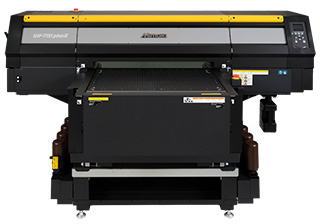
High-performance UV-LED inkjet printer "UJF-7151 plusII"
A case study of Sakura Seisakujo Co., Ltd., which has installed the UJF-7151 plusII, was published in the sign and display industry magazine "POPEYE" , No. 281 (February 2026 issue).
The following is the published article in its original form.
An Inkjet Printer Takes on the Challenge of an Aging Artisan Workforce
Sakura Seisakujo Co., Ltd. in Koshigaya-shi, Saitama, manufactures and sells folding screens, display bases, and other components for traditional Japanese festival dolls. The company handles everything from woodworking to painting in-house. Founded in 1945, the company traces its roots to woodturning in Mukojima, Tokyo. After its workshop was destroyed in the Great Tokyo Air Raid, the founder established the business at its current location.
During the postwar period, the company produced and exported items such as whistles and wooden blocks before securing steady orders for precision-made fishing rod handles using its woodturning expertise.
As fishing rod production shifted to China in the late 1960s and early 1970s, Sakura Seisakujo entered the doll industry after being asked to make storage boxes for samurai helmets. Building on its woodworking and painting skills, the company expanded into folding screens and display platforms, growing its business alongside the expansion of Japan’s doll industry during the baby boom. Today, it does business with doll wholesalers and retailers across Japan.
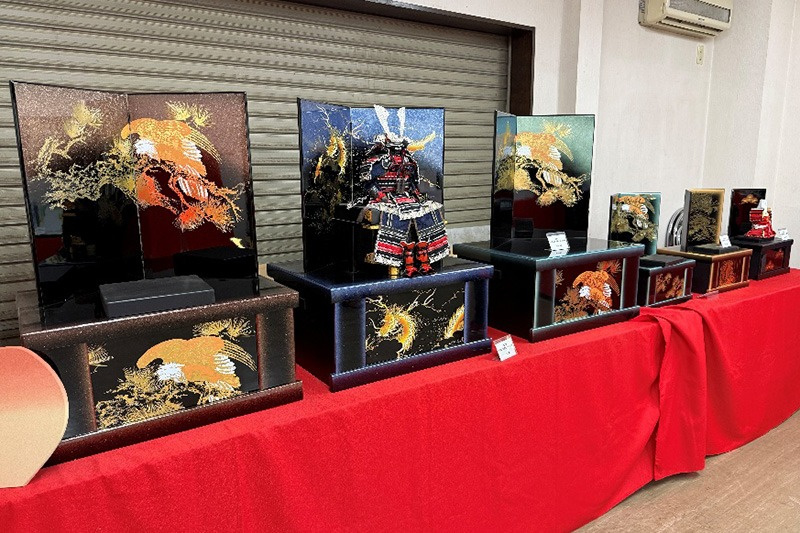
Sakura Seisakujo manufactures storage boxes, folding screens, display bases, and other components for traditional Japanese festival dolls entirely in-house.
While Sakura Seisakujo handled woodworking and painting in-house, artwork printing and gold foiling still relied on outside artisans. As these artisans aged and the shortage of successors became increasingly scarce, President Mitsuhiro Sakura began seriously considering how to sustain the business, particularly during the COVID-19 pandemic.
To address these challenges, Sakura Seisakujo turned to digital printing. In 2023, the company installed Mimaki’s UJF-7151 plusII flatbed UV printer, which offers high productivity and stable operation. With a print area of 710 × 510 mm (28 × 20 in), support for materials up to 153 mm (6 in) thick, and resolutions up to 1,800 dpi, it also offers a range of ink options to meet diverse application needs.
Having made the shift from analog to digital production, how well did Sakura Seisakujo’s investment in Mimaki technology meet its expectations? We spoke with President Mitsuhiro Sakura and Yukiko Wakatsuki from Product Planning, who uses the UJF-7151 plusII to produce the company’s products.
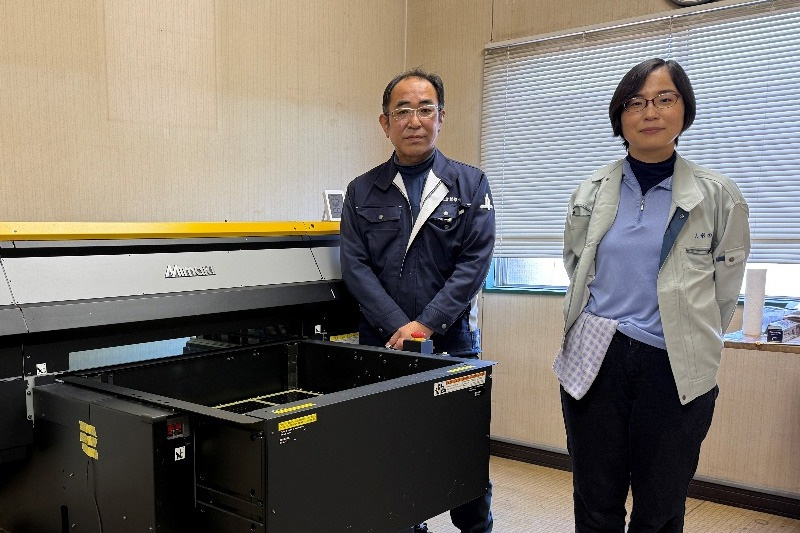
(From left) Mitsuhiro Sakura, President and Representative Director; Yukiko Wakatsuki, Product Planning
― Background to the Printer Installation
Sakura: Folding screens and display bases play an important role in enhancing the elegance and visual appeal of traditional Japanese festival dolls. We had artisans create the designs and reproduced them using screen printing. However, managing the screens was cumbersome and relied heavily on individual expertise, while the process also had limitations in reproducing fine details. As we looked for an alternative, we discovered inkjet printing.
At the time, I knew virtually nothing about printers, so I started by searching online. I looked at several major manufacturers whose names I recognized, but Mimaki’s website stood out for its detailed information and practical application examples. Since there was also a nearby sales office, I decided to get in touch.
Wakatsuki: At Mimaki’s Saitama Sales Office in Omiya, the team listened carefully to our needs and proposed a printer capable of printing directly onto three-dimensional wooden objects. We chose the UJF-7151 plusII because of its wide range of capabilities, including support for foil applications.
― First Impressions After Putting the Printer into Operation
Sakura: We shifted our mindset from relying on "artisans" to working with "operators," which has helped us reduce tasks that only one particular person can perform. At the same time, we have maintained the quality of our products while gaining the flexibility to explore new forms of expression.
Wakatsuki: It has been a process of trial and error. UV ink can be difficult to adhere to urushi finishes commonly used in the tradisional Japanese festival doll industry. Since the materials are difficult to replace if something goes wrong, we have been building our know-how with support from Mimaki.
Our main focus now is "digital foiling." We have refined the process through repeated testing to reproduce traditional gold decoration, adjusting foil application, uniformity, processing time, and even our existing tools.
Sakura: As a result, customers now find both the dimensional effect and the look of the gold finish virtually indistinguishable from conventional methods, allowing us to bring gold decoration in-house. We are continuing to improve the process to further reduce production time and ensure consistent quality.
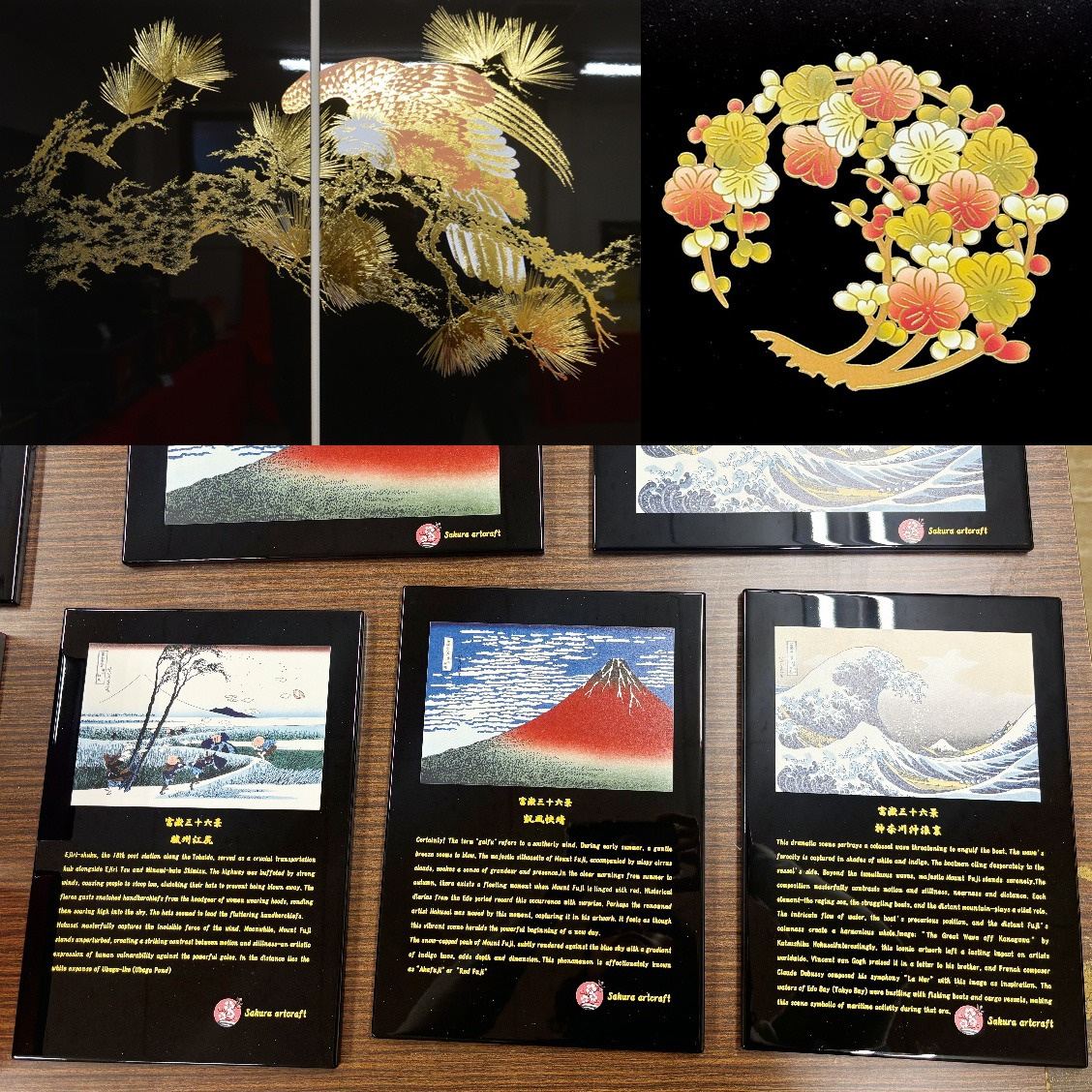
With the UJF-7151 plusII, Sakura Seisakujo has digitized processes previously handled by artisans, including foil decoration, while gaining the ability to create designs in a wide range of styles and sizes in-house.
― Future Plans
Sakura: Inkjet printing has reduced outsourcing and transportation costs, improved delivery predictability, and made inventory management more stable. Another key advantage is the ability to produce the same design in different sizes—something that was difficult with conventional mold-based processes. This gives us greater flexibility to meet detailed customer needs, including one-off products.
We have also introduced Mimaki’s "Kebab HS" option for cylindrical printing and started producing character bottles to support local promotion. Going forward, we hope to expand into more value-added products, such as Braille using embossed printing.
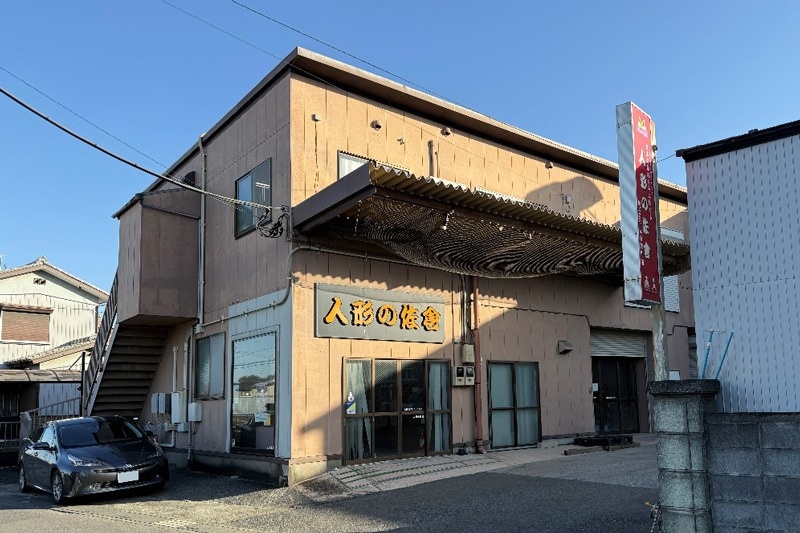
Exterior View of Sakura Seisakujo
*The company is currently not accepting new orders.
User profile
- NameSakura Seisakujo Co., Ltd.
- IndustryManufacture and sale of festival doll accessories, including folding screens, display platforms, helmet storage boxes, and wooden plaques, as well as novelty products.
- Address3-205-1 Higashimachi, Koshigaya-shi, Saitama, Japan
- Phone number+81-48-988-1371