A case study of TERUMI ENTERPRISE CO., LTD. which has installed the TxF300-75 and TxF300-1600 was published in the order goods magazine "OGBS magazine" , Vol. 102 (May 2026 issue).
The following is the published article in its original form.
Why a Long-Established Print Factory Switched All Its DTF Printers to Mimaki’s TxF300-75
"We realised that a stable two-head DTF printer is the best choice for mass production."
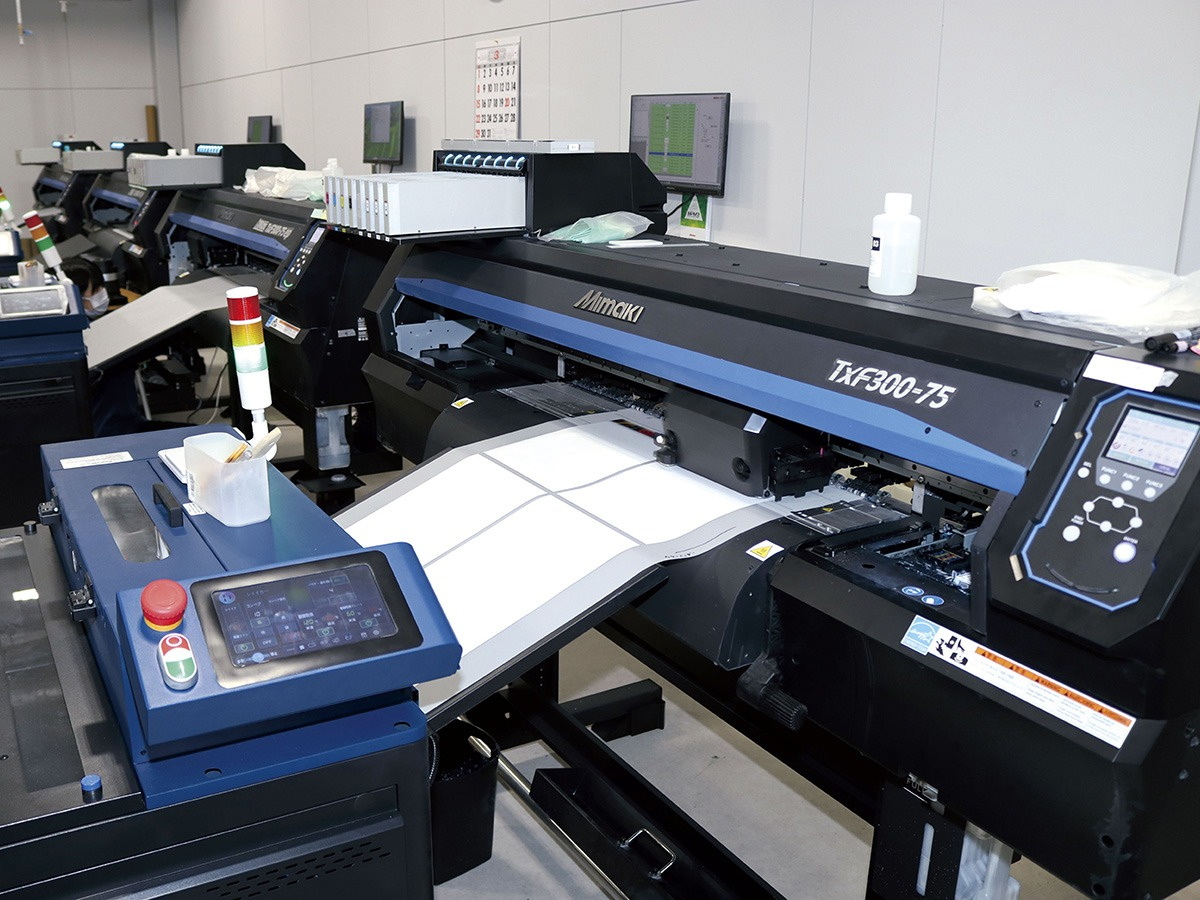
TERUMI ENTERPRISE CO., LTD. has installed six Mimaki TxF300-75 two-head DTF printers and is making full use of them for mass production of T-shirts.
Founded in 1996, TERUMI ENTERPRISE CO., LTD. is a long-established print factory with more than 50 years of industry expertise and its own production facilities in Japan and overseas. Known as a reliable outsourcing partner for high-quality, high-volume print production, the company has 45 employees and annual sales of 656 million yen, making it one of Japan’s leading apparel print providers.
The company first introduced DTF printers in 2019, before DTF printing had begun to gain wider recognition in Japan.
Its first machines were Chinese-made printers priced under one million yen. At the time, the company handled many event T-shirt jobs for concerts, anime-related projects and simply needed as many printers as possible. Over the next five years, it continued adding machines, eventually installing a total of 15 units. However, President Kamada says the company had long struggled with its Chinese-made DTF printers.
"Out of 15 printers, only four were actually running. Even with the same model, the colour differed from one machine to another, and there were times when we spent an entire day just matching colours. Sometimes, running the automatic cleaning function would actually worsen the print quality, leaving the output looking dirtier. When an error occurred, we contacted the head office in China, but we couldn’t get the kind of answers we needed. There was also the language barrier, so in the end it was faster to fix the problems ourselves."
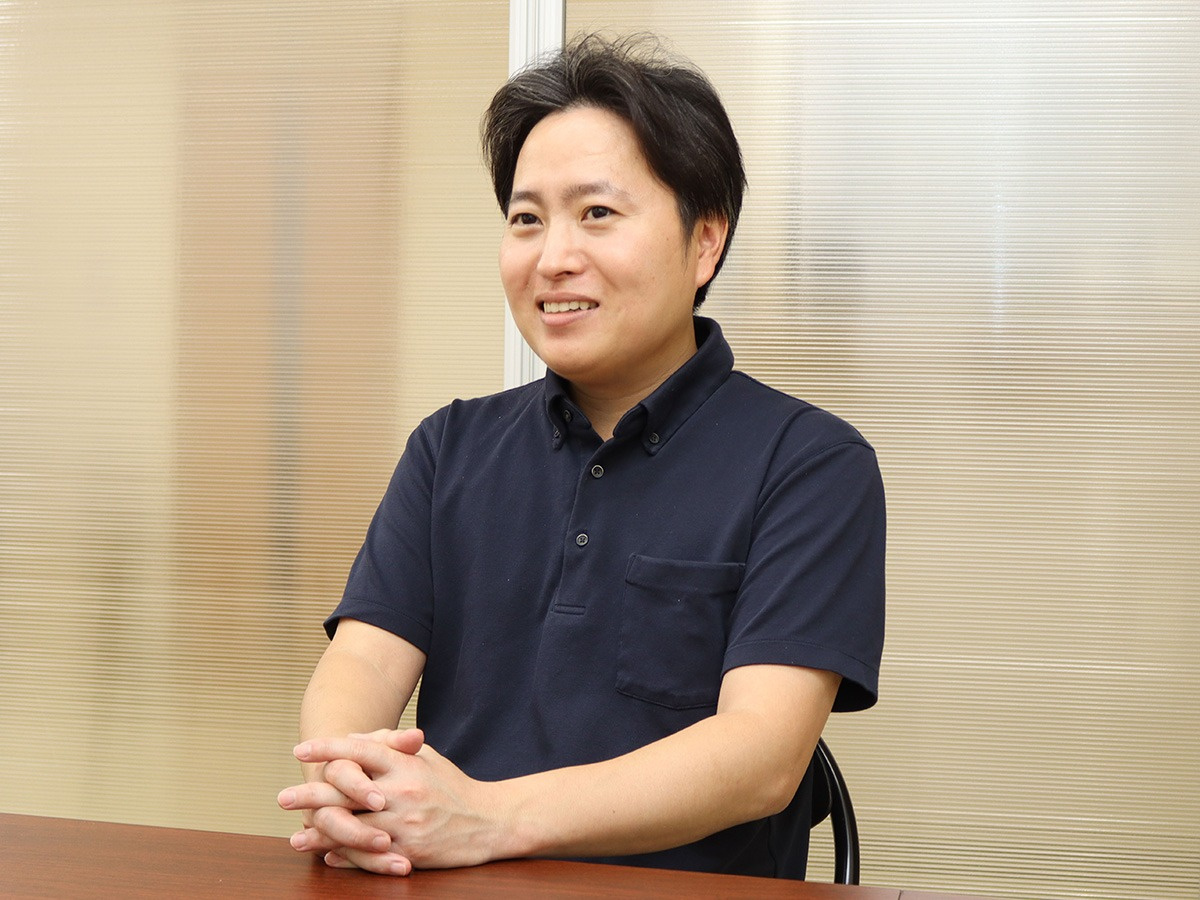
Mikiya Kamada, the company’s third-generation president of TERUMI ENTERPRISE CO., LTD.
Recognising the Limits of Chinese-Made DTF Printers and Looking to a Japanese Manufacturer
A particular source of stress was the inability to plan production schedules with confidence. For large-volume orders, work had to be allocated by working backwards from the delivery date, but unpredictable machine trouble made it difficult to organise the production floor. If a problem occurred at the printing stage, it affected all subsequent processes, from cutting and pressing to inspection and shipping, and machine downtime often meant overtime.
Staff frequently found themselves asking, "Are the sheets ready yet?" or warning, "We’re not going to make the deadline." Because the nozzles could clog if the printers were left idle, President Kamada even came in on weekends to perform nozzle checks. During busy periods, work was constant and there was little chance to mentally switch off. Over time, the company increasingly wanted a stable DTF printer from a domestic manufacturer.
TERUMI ENTERPRISE had originally specialised in heat-transfer apparel printing, so it already had a wide range of solvent printers and cutting plotters. Because Mimaki machines were easier to operate than those of other manufacturers, the company had standardised all of its equipment with Mimaki Engineering.
When Mimaki released its first DTF printer, the TxF150-75, the company took notice. However, after seeing the actual machine, the company felt that its production speed was slightly below what it needed for its own production volume. About a year and a half later, Mimaki announced the two-head TxF300-75, and President Kamada purchased three units at once, convinced it would meet the company’s needs.
Although four- and five-head DTF printers were already on the market, he says speed is not simply about the number of printheads. "Among the many DTF printers we compared, the TxF300-75 felt the best balanced and least stressful to use. We believed it would be fully capable of mass production, even with two heads."
Local support from Mimaki’s branch office in Kagawa Prefecture and the team’s familiarity with Mimaki's RIP software "RasterLink" were also key factors.
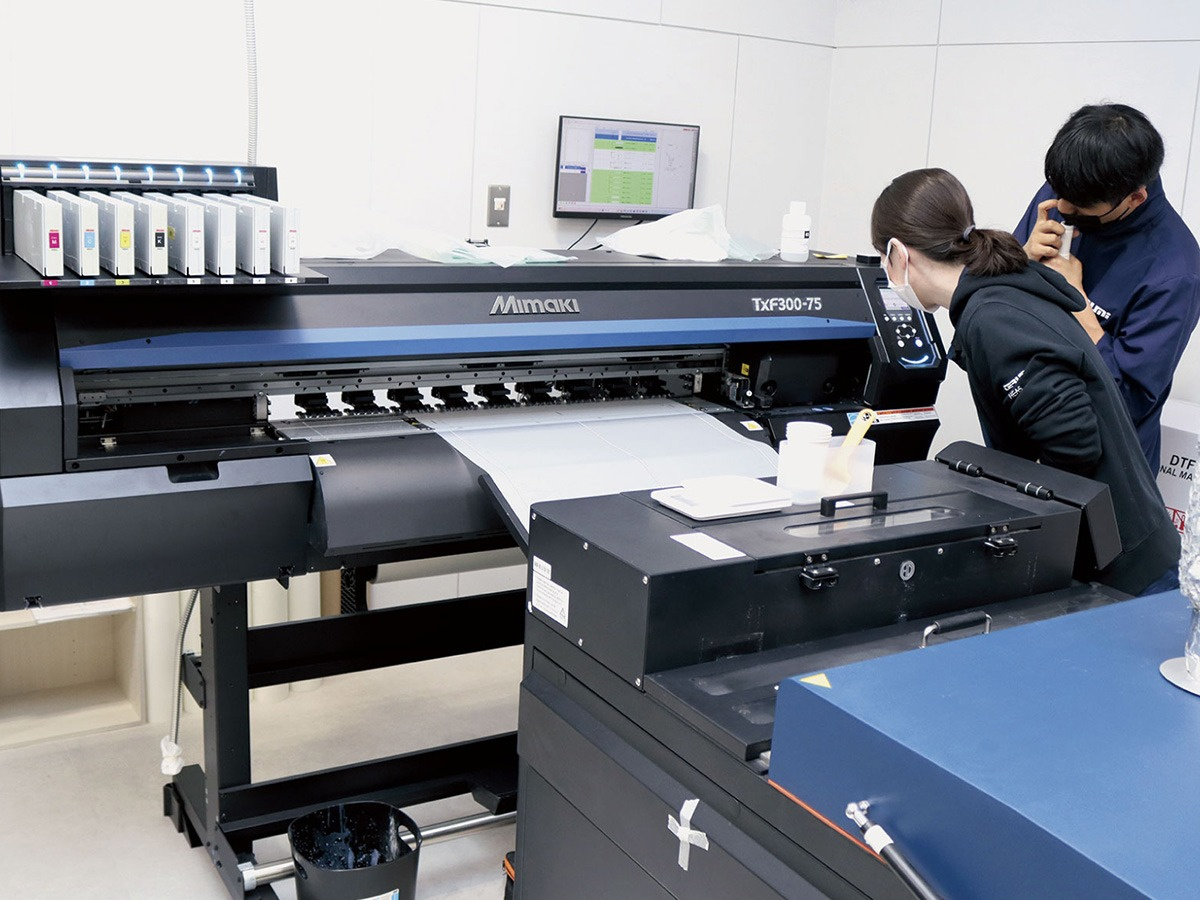
Having already used Mimaki solvent printers and plotters, the team at TERUMI ENTERPRISE quickly adapted to the TxF300-75.
Producing 5,000 T-Shirts per Day and 100,000 per Month
After installation, President Kamada’s first impression was simple: "All the anxiety disappeared."
"The color reproduction and output are stable, so we can now plan our production schedule properly. I was also impressed by how easy it is to set the film. You simply pass the roll through the bar, secure it, and then print continuously for 100 metres. Previously, everything was manual. If the film shifted, we had to stop the machine and make fine adjustments again and again."
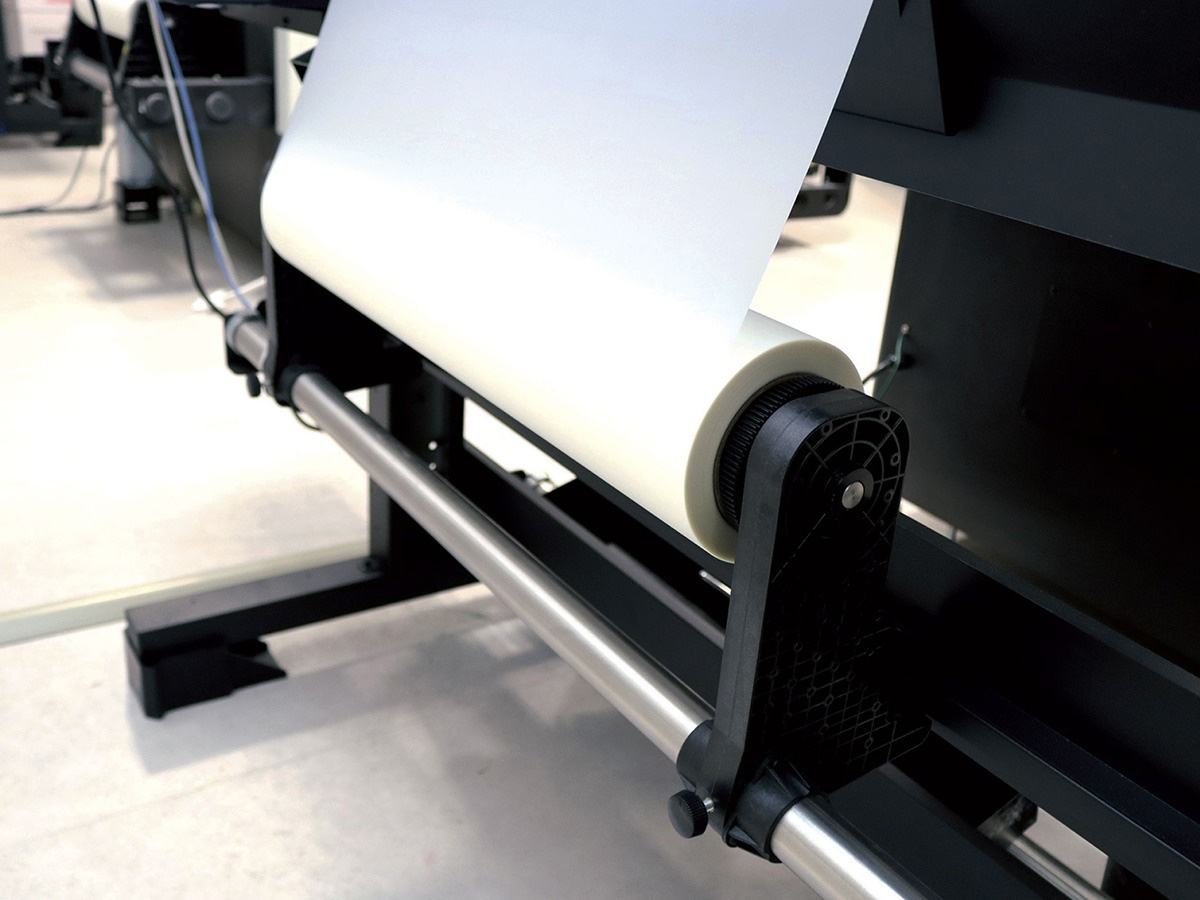
Because the roll can be securely fixed, print misalignment does not occur even during continuous operation.
What TERUMI ENTERPRISE needed in its next DTF printer was balance: the speed of a machine with two or more printheads, combined with the stability to minimise maintenance and colour-matching work. The TxF300-75 matched those requirements exactly.
To mass-produce high-quality apparel, the company replaced four Chinese-made printers that had been used for more than five years with six Mimaki units. It was a major investment, but President Kamada had no hesitation.
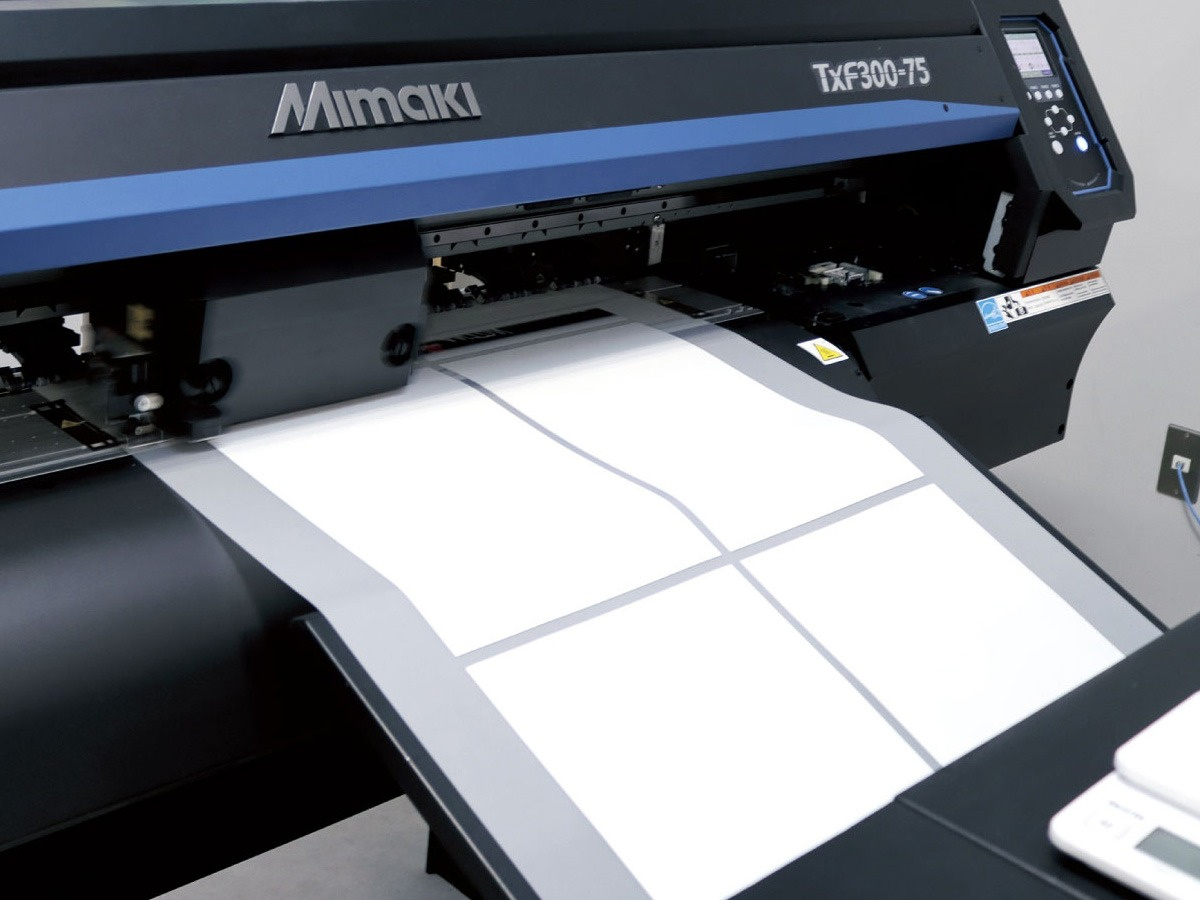
At TERUMI ENTERPRISE, one TxF300-75 produces approximately 100 T-shirts per hour. With six units in operation, the company produces around 5,000 T-shirts per day.
"With less stress on the production floor and better print quality, the investment has more than paid off. Overtime has been eliminated, and we now have more time to focus on each print, helping us win new OEM business with customers who have strict design requirements."
With six TxF300-75 units and seven heat presses, the company now consistently produces 4,000 to 5,000 T-shirts per day and more than 100,000 per month.
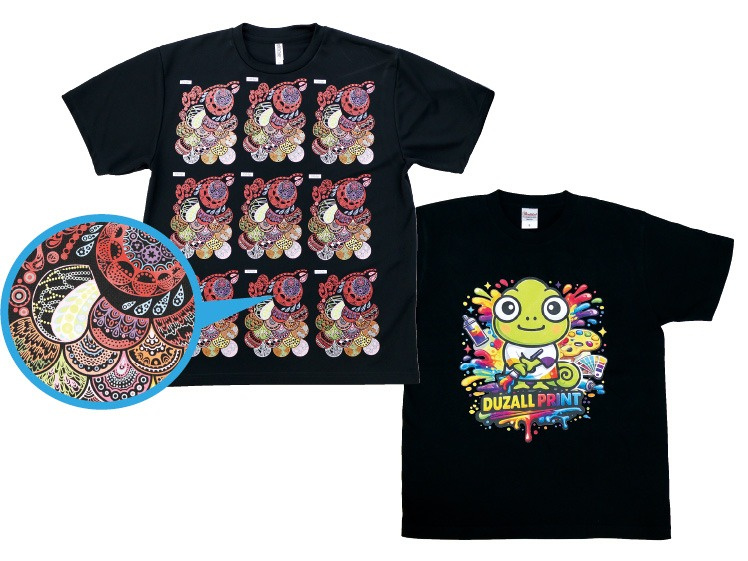
T-shirt samples produced with the TxF300-75. Even fine lines are reproduced clearly.
Because of the high precision of the TxF300-75, the company has also recently introduced the wide-format TxF300-1600. Like the TxF300-75, the TxF300-1600 uses a two-head configuration, but offers twice the print width at 1,600 mm.
"We had such a good impression of the two-head type that we decided we would buy an upper model in the same series once it became available. We plan to use it for printing on curtains, floor mats and roll fabrics. It is also good that DTF allows us to print on materials that were difficult to handle with dye-sublimation transfer," says President Kamada.
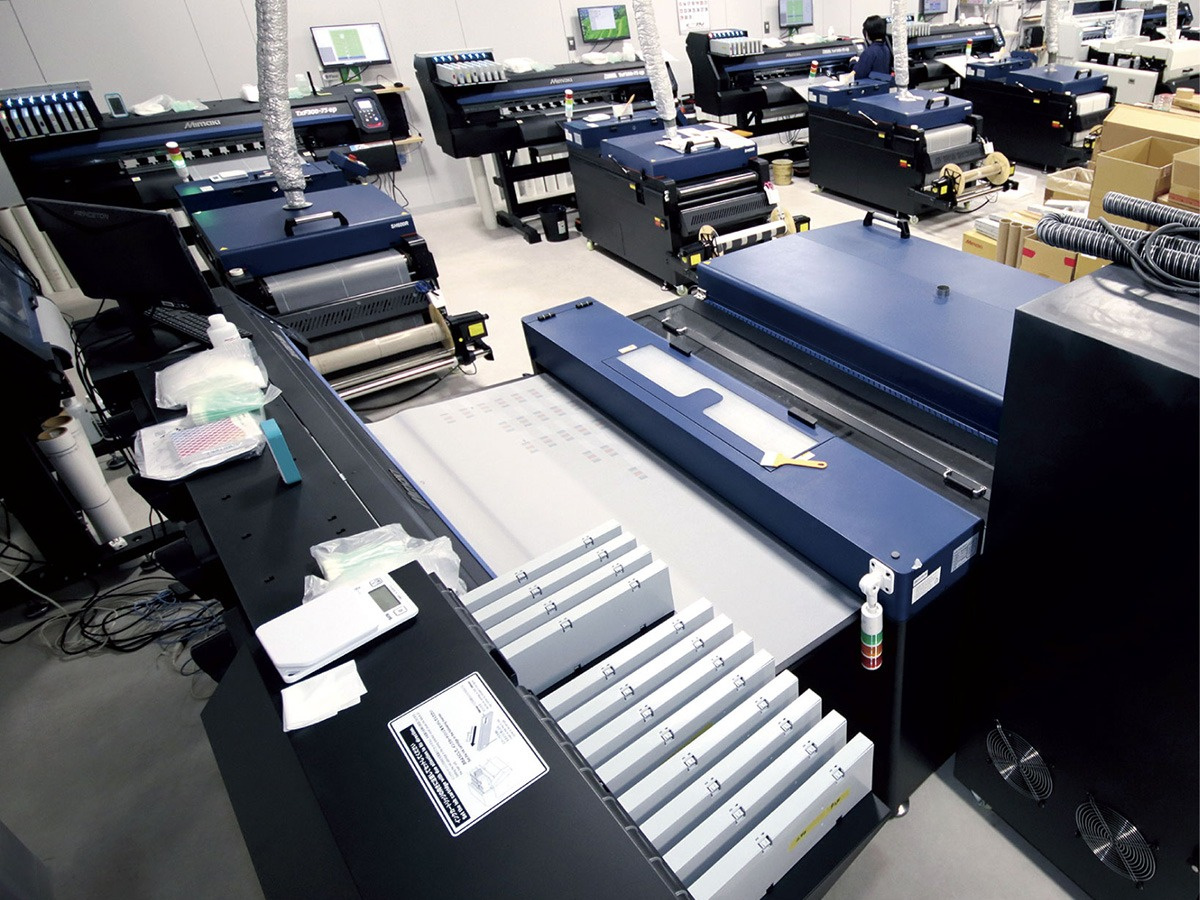
The company now operates a total of seven TxF Series printers: six TxF300-75 units and one wide-format TxF300-1600 unit.
User profile
- NameTERUMI ENTERPRISE CO., LTD.
- IndustryPrinting, large-format printing, branding for offices and retail stores, etc.
- Address800-2 Ikenobe, Miki-cho, Kita-gun, Kagawa, Japan
- Phone number+81-87-840-2055
- URLhttp://www.trnet.co.jp/